

What is perfect binding?
Perfect binding is a process in which the spine of the book is attached to the cover. The spine is the part of the book that will remain stationary, while the covers can be turned. How does perfect binding work? The most common perfect binding method is saddle stitching. In this case, the two pieces of paper are stitched together with thread or yarn and then the resulting seam is folded over and sewn down. For books, journals, catalogues, manuals, directories, periodicals, etc., perfect binding is a book binding procedure. Paperbacks and soft covers are other names for books bound in this manner. The ideal bound book has a wraparound cover and the well-known square spine, making it a stylish and expertly bound book. 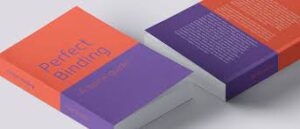
Process of perfect binding
The book block’s interior pages are jogged and clamped. To expose the paper fibers and expand the area for glue contact, the spine edge that will be affixed to the cover is milled and notched. The book block has a thick layer of flexible hot glue placed on it. The cover is hinge-scored to trap side glue, which results in a stronger binding, less spine breaking, and correct opening and closing of the book. The cover is then pressed onto the book block while the adhesive is still hot after the glue has been applied. The book’s three edges are cut when the adhesive has had time to fully cure.
Types of binding
There are many types of binding which are given below:
Sewn binding
Sewn binding, or sewing bookbinding, is a method of binding books. It is a flexible technique that uses leather-covered thread to sew together and cover the pages of a book. Sewn bindings are used to protect the book’s content from damage and to ensure it remains in pristine condition for a long time. They are a common form of binding in the book trade and can be found in most modern libraries. History The earliest forms of sewn bindings date back to the 15th century, when the leather covers were made by hand. 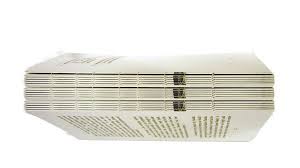
Glued binding
Glued binding is the practice of attaching a book to a cover using glue. This is usually done in a workshop setting, but the technique can be used at home by a dedicated craftsman who has the necessary equipment and skills. The most common glued bindings are leather, but other materials such as cloth or paper may also be used. History In the early years of printing, books were bound using cords, clamps, pins, and glue. 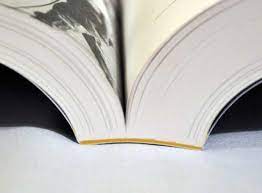
PUR-glued binding
PUR Binding is a very robust and economical method of binding that makes use of polyurethane reactive (PUR) adhesives. PUR Binding is appropriate for thicker papers as well as things with a lengthy shelf life. Additionally, it enables a level surface for the bound book without sacrificing the strength of the binding.
The result is a strong and durable laminate that’s easy to apply and can be applied to a variety of substrates including wood, metal, glass and more. Ceramic Tile Laminate is an ideal choice for high traffic areas. It is impervious to moisture and can be cleaned easily. It provides a low maintenance surface that will remain stain resistant and resist fading. PUR adhesive makes it easy to apply a thin layer of laminate on top of any substrate. There are no messy glue pads or prep work required.
Lay-flat binding
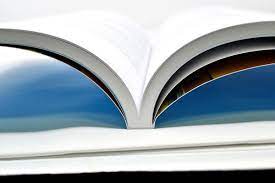
For professionally produced paperback books, perfect binding is the most typical bind technique; nonetheless, it prevents volumes from lying open on a flat surface. Cold glue is used in Lay-Flat binding instead, and it is thinly applied to the spine. As soon as it has dried, the cover is nailed to the endpapers on either side of the spine.
Spiral Binding
Spiral Binding is a form of bookbinding in which the pages are wrapped around a spiral-shaped spine and then glued together. The spine can be flat or arched, and the binding can be single or double-spined. Spiral bindings are used for books that need to have a flexible spine, such as cookbooks, sewing books, and books that will be carried in a purse. History Early history The earliest known book binding method was the wicker basket book, which was invented in Egypt around 2500 BC and spread throughout the Near East.
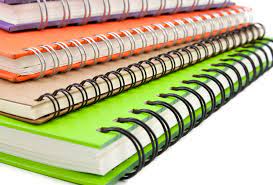
Wire-o binding
In the field of building, binding wire is used to tie applications. In order to maintain the building intact, it is frequently employed in the construction industry to tie the rebars at junctions and joints. Mild steel is used to make binding wire. 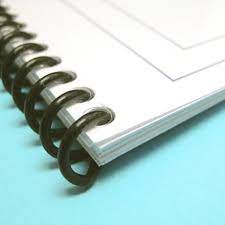
Why perfect binding is used?
There are several reasons why perfect binding is used, including the following: It’s easy to read and understand. It makes it easier for readers to navigate through the book. It’s cheaper than other binding methods. Perfect binding is the most common method used for books published in North America and Europe.
There are several compelling advantages to perfect binding. It is first and foremost incredibly affordable, which is crucial to many people. In addition to being more affordable than hardcover binding techniques, perfect binding can also be utilized on relatively modest print runs, giving consumers the opportunity to produce high-quality printed goods on a budget.
Perfect binding also produces a flat spine that may be printed on, which is another advantage. This enables details like the book’s title and author to appear on the spine.
How perfect binding is made?
Perfect binding is a process by which the pages of a book are bound together using adhesive. It is used to produce books of higher quality than ordinary books, and it allows the book to be opened flat rather than up at an angle. The process is similar to the technique used to bind magazines, but instead of using glue, it uses paper. The pages of a book are folded in half (the spine) and then the back side is glued to the front of the book. This way the book is held together without any kind of stitching or thread. Soft cover book binding techniques like perfect binding are very popular. With this form of binding, a robust yet flexible thermal glue is used to bond the pages and cover together at the spine. The remaining three book sides are then trimmed as necessary to give them “ideal” clean edges.